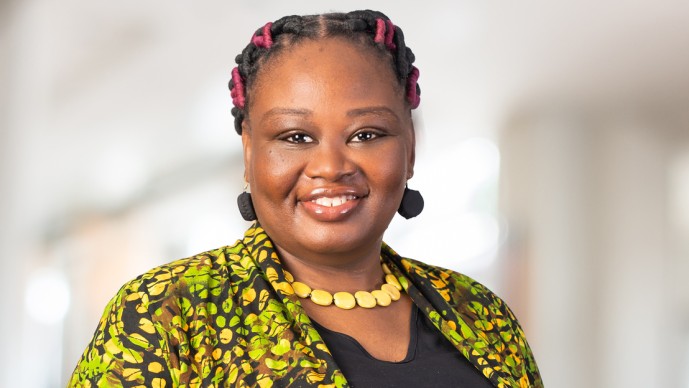
Melissa Kapulu
Principal Research Investigator
Associate Professor
About Melissa
In 2016, Melissa Kapulu conducted a study where 161 healthy adults from across Kenya were infected with the malaria parasite to see how the infection would develop. Nearly one quarter of the study volunteers developed no infection whatsoever.
Melissa was shocked. She triple-checked the work and even called the manufacturer of the parasite to make sure they indeed sent her real malaria parasites.
All the study's volunteers had varying degrees of past exposures to malaria, so some level of natural immunity was expected. But zero parasites was unforeseen - and exciting.
"We knew that repeated exposure can kind of protect you, but this really took it home," said Melissa, principal research investigator at the KEMRI-Wellcome Trust Research Programme in Kilifi, Kenya. Now, Melissa is setting up a new project to investigate what is driving that immune response. The findings could inform malaria vaccine development.
Melissa's original study, published in 2022, is part of a growing number of controlled human infection studies that initially started in Africa in 2012. Before then these studies - in which volunteers are deliberately injected with known pathogens in a controlled setting - took place primarily in developed countries – in pathogen naïve, unexposed volunteers. But they could neither provide a complete picture of a vaccine's efficacy nor how immunity develops because the volunteers had limited exposure to malaria and other diseases that are endemic in low-and middle-income countries. For example, some malaria vaccine candidates that looked promising when they were first tested in Europe and the US turned out to be not as effective when given to African adults whose responses were complicated by their partial natural immunity to malaria. Melissa's work is important because it evaluates how a vaccine would perform in a real-world scenario as well as give insight into how naturally acquired immunity can be leveraged for vaccine development.
"It's one of the great ways you can really get a crack of what's going on because you're doing this in humans where the disease is important," she said.
Along with her multiple projects, Melissa spends significant time mentoring students. The passion to mentor and train came from Melissa's first exposure to research working on her undergraduate dissertation on Zambia's Expanded Program on Immunization. The lead of the program at the time, gave her uninterrupted access to the work including inviting Melissa to her home to ask endless questions and combing through her extensive library. The experience inspired her to not only pursue a research career, but to be that kind of resource to others.
"It made me want to be someone who is available for and encourages the next generation of African scientists," said Melissa. "Because if we keep asking the right questions and keep looking for solutions from our science, then the future is set."
Key Publications
Controlled Human Malaria Infection Studies in Africa – Past, Present, and Future
Grand Challenges Awards
Uncovering Targets of Protective Immunity for Next-Generation Malaria Vaccines
Initiative: Grand Challenges
Challenge: 2023 Grand Challenges Annual Meeting Call-to-Action
Learn More About This Award
October 30, 2024
Major Funding Awards and Honors
Share this content
Associated Gates Foundation Strategy
Discovery & Translational Sciences
Our goal: