Innovations in Decentralized Pan-Orthoebolavirus Diagnostics
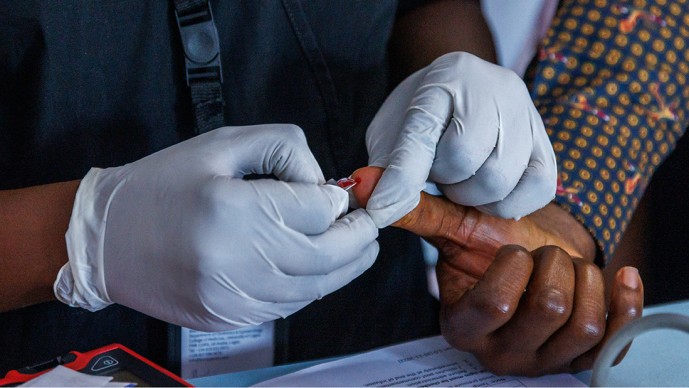
To accelerate the identification and deployment of solutions with the potential to impact the current Ebola outbreak, applications will be reviewed on a rolling basis and may be selected to move forward to the grantmaking process prior to the submission deadline.
Before applying to this Grand Challenges request for proposals (RFP), applicants should review the Rules and Guidelines, Application Instructions, Gates Foundation Terms and Conditions, and Frequently Asked Questions for this Challenge.
Please note that other funders have expressed interest in potentially funding projects submitted through this RFP. Representatives from these funders may participate in the review process. Applicants will be notified if their proposal is selected for further consideration by an interested funder other than the Gates Foundation.
Background
The Current Outbreak
On May 15, 2026, the Democratic Republic of the Congo (DRC) declared its 17th Ebola outbreak, confirmed in Ituri Province in northeastern DRC and caused by Bundibugyo virus (BDBV), an Orthoebolavirus species for which no licensed vaccine or approved therapeutic currently exists. Two days later, WHO declared this outbreak a Public Health Emergency of International Concern (PHEIC), citing the high case fatality ratio, rapid geographic spread, and absence of licensed countermeasures for BDBV. As of July 5, 2026, more than 1,500 confirmed cases have been reported across Ituri, North Kivu, and South Kivu provinces, with over 490 confirmed deaths. Uganda has confirmed 20 cases, and one imported case was identified in France. This is the fastest-spreading and third-largest recorded Ebola outbreak in history, and the largest ever caused by Bundibugyo virus.
The outbreak is centered in Ituri Province, with a hotspot in Bunia, Rwampara, and Mongbwalu health zones, a region where the outbreak appears to have started as a family cluster, followed by health-facility transmission and then wider community spread. The combination of delayed detection, incomplete contact tracing, mining-related mobility of community members, insecurity and the large number of informal health providers suggests that the actual scale of transmission may be greater than currently detected. Against this backdrop, the diagnostic toolbox for Bundibugyo virus is insufficient. No currently available antigen rapid diagnostic test (RDT) meets the WHO specifications for BDBV detection. Reverse transcriptase polymerase chain reaction (RT-PCR) is the only validated diagnostic approach, but case confirmation requires venipuncture under full personal protective equipment (PPE), triple-packaging, cold-chain transport to a laboratory, centrifugation, plasma separation, chemical inactivation, RNA extraction, and expensive laboratory equipment. This multi-step, infrastructure-dependent workflow cannot be performed safely or at scale in the most affected health zones. As a result, cases cannot be confirmed or excluded rapidly enough to support timely contact tracing and safe burial decisions, with direct consequences for outbreak containment. The absence of validated alternative specimen types, easier sample prep workflows, and sensitive enough antigen targets and antibody pairs or signal enhancement for BDBV leaves developers without the foundations needed to build simpler, field-ready assays. The current outbreak has also exposed persistent quality assurance gaps, including the absence of reference materials for BDBV and inadequate training tools for healthcare workers conducting decentralized testing.
The 2026 outbreak is believed to have been circulating in Ituri for more than three weeks before the official declaration in May, with early cases going undetected until mortality among healthcare workers triggered investigation. Population-level surveillance tools drawing on routine health facility data, community signals, environmental monitoring, near-point-of-care (nPOC) diagnostics, and field genomic sequencing could substantially shorten the interval between first transmission and outbreak declaration in future events. Significant efforts in genomic surveillance networks, sentinel programs, and national health information systems are already underway across DRC, Uganda, and the broader region. This Challenge aims to complement and accelerate those efforts by addressing specific technical gaps that remain, particularly in detection sensitivity, environmental surveillance, and the integration of community-level signals into actionable early warning.
The Challenge
This Grand Challenge seeks specific, field-ready innovations in pan-Orthoebolavirus diagnostics that address the concrete gaps exposed by the 2026 outbreak and prepare the global community for the next one. We are seeking well-defined solutions to well-defined problems, from teams with the specific expertise, access, and partnerships to deliver them.
Table 1 outlines Opportunities in scope for this RFP, which spans biomarker discovery, specimen validation, and diagnostic product development. The relevant expertise is specific, the access requirements are strict, and proposals should come from teams with demonstrated track records in Orthoebolaviruses or related high-consequence pathogen diagnostics.
The target deployment setting is the Ebola hotspot region in DRC or other countries in the region. Solutions must eliminate the need for complex laboratory infrastructure, cold chain, and reliable electricity, and be suitable for areas with logistical disruption and healthcare workers who may have limited formal diagnostic training. Applicable design criteria for product-development-related proposals are described in Table 2.
The Challenge aims to:
- Generate scientific foundations including novel antigen targets, validated specimen types, and analytical reference data needed to develop the next generation of BDBV-capable, pan-Orthoebolavirus, and pan-viral-hemorrhagic-fever (VHF) diagnostic products.
- Accelerate development of field-deployable diagnostic products that work in Ituri-level settings with no cold chain, no laboratory, operable by community health workers, and validated against all Orthoebolaviruses.
- Build population-level early-warning capacity that can detect Orthoebolavirus transmission before the first hospitalized case, using environmental, data-driven, or genomic approaches adapted to endemic-country infrastructure.
- Strengthen quality assurance and implementation infrastructure to ensure that decentralized VHF testing is reliable, trustworthy, and sustained between outbreaks.
We are looking for proposals that:
- Address a specific, named use case from Table 1 with a technically credible workplan, defined milestones, and go/no-go criteria.
- Are grounded in the deployment context of affected and high-risk countries, or a comparably constrained setting. Proposals should explicitly describe how the proposed solution functions in the target setting.
- Demonstrate the partnerships required to execute the work including, where possible, partnerships with investigators and institutions based in DRC, Uganda, or other EVD-endemic countries. Proposals that depend on access to specimens or facilities they do not currently have and cannot demonstrate a credible plan to obtain will not be funded.
- For biomarker and specimen research (Opportunities 1 and 2): documented access to BSL-4 containment and outbreak specimens is mandatory. We strongly encourage global partnerships between institutions with the required laboratory infrastructure and institutions involved in the current outbreak.
- For diagnostic product development (Opportunity 3): proposals must describe a plan for BSL-4 performance confirmation, either through an independently identified partner or through the central validation effort currently coordinated by WHO and partners. Strong product development proposals without independent outbreak sample access are welcome provided this pathway is clearly described.
- Include any available supporting data and clear descriptions or renderings of proposed solutions.
- Commit to Gates Foundation global access requirements and open-access publication of all results, including negative findings from specimen or inactivation validation studies. Open sharing/publication obligations are subject to ethics approvals, consent, de-identification, material-transfer terms, and applicable law.
- Are willing to share prototype systems, reagents, and data with the Foundation and designated third-party evaluators as requested.
For this challenge, we are not seeking proposals that:
- Require BSL-3/BSL-4 handling as part of routine test use (as opposed to development and validation).
- Consist primarily of implementation, procurement, or logistics activities without substantive research and development content addressing one of the use cases in Table 1.
- Are unwilling to share materials and data for third-party evaluation if requested. Open sharing/publication obligations are subject to ethics approvals, consent, de-identification, material-transfer terms, and applicable law.
Award Structure
Through this challenge, we anticipate funding a portfolio of up to 12 awards with funding amounts for individual awards aligned with the scope of work required for each use case. Table 1 below provides descriptions of use cases and indicative budget ranges to guide proposal preparation.
Funding requests require commensurate justification including detailed budgets, demonstrated prior work, and a compelling milestone plan. The Foundation reserves the right to offer partial awards or to negotiate scope adjustments prior to finalizing an award. Final award amounts, number of awards per track, and grant durations will depend on proposal quality, scientific rigor, and portfolio fit.
Indirect costs will be considered and should be included in the budget for up to the grant amount awarded, subject to the Gates Foundation's indirect cost policy.
Eligibility
This initiative is open to research institutes, nonprofit organizations, for-profit companies, international organizations, government agencies, and academic institutions. The Foundation strongly encourages:
- Applications from institutions based in or partnering substantially with organizations in DRC, Uganda, or other EVD-endemic countries. Access to outbreak specimens, field sites, and community trust in affected areas is operationally critical to several use cases and will be weighted in review.
- Applications from investigators with prior experience in high-consequence pathogen diagnostics, specifically Orthoebolavirus or other BSL-4-classified pathogens. For Opportunities 1 and 2, prior experience in this space is an effective requirement.
- Multi-institutional collaborations pairing technology developers with accredited high-containment facilities, national reference laboratories, and clinical partners in endemic countries.
All applicants must comply with the Gates Foundation's global access requirements. Individuals and organizations classified as individuals for U.S. tax purposes are not eligible. Applications must be submitted in English.
Table 1: In-Scope Use Cases and Award Information
| Opportunity 1: Biomarkers Find signals that make tests more sensitive or more clinically useful |
|
| Budget: US $350-750K | Duration: 18-24 Months |
|
The 2026 Bundibugyo outbreak exposed two foundational diagnostic gaps. No validated antigen targets exist for BDBV, and no antigen RDT currently meets WHO TPP specifications for this species. Existing RDTs fail primarily at low viral loads (Ct above 30) and show inconsistent field performance even at high viral loads. Separately, clinicians currently lack tools to distinguish EVD from other febrile illnesses at first presentation, before viral load is sufficient for antigen detection.
Applicant requirement: Access to BSL-4 containment and to outbreak patient specimens (prospective or archived, including BDBV) is required. Applicants must describe existing or formally arranged partnerships with accredited high-containment facilities and clinical sites with outbreak access. Proposals without this documentation will not be considered. |
|
| Opportunity 2: Specimen Innovations Make testing safer and easier |
|
| Budget: US $300-600K | Duration: 18-24 Months |
|
Venipuncture is slow, risky, and a bottleneck that delays diagnosis. Alternative specimen types including capillary blood, gingival-margin swabs, oral mucosal transudate, tongue dorsum swabs, and urine offer practical advantages but require rigorous, prospective analytical validation using optimal workflows before clinical adoption.
Applicant requirement: Specimen type validation (A) requires prospective access to EVD patients. Applicants must demonstrate an existing or formally arranged partnership with a clinical site in an active or recent outbreak area. Inactivation validation requires BSL-4 access for live-virus work. All other bullets may proceed at BSL-2 using validated surrogates with a BSL-4 confirmation plan. Proposals for enclosed collection-inactivation devices should be linkable to the specimen characterization data generated under Opportunity 2A and the inactivation validation data generated under Opportunity 2B. The Foundation does not expect a single applicant to span all three tracks, but proposals should describe how specimen performance data and validated inactivation chemistries will inform device design and performance specifications. |
|
| Opportunity 3: Diagnostic Products Deliver tests that can be used where patients first present |
|
| Budget: US $300-800K | Duration: 24-36 Months |
|
No antigen RDT currently meets WHO TPP for BDBV, the causative agent of the 2026 outbreak. Molecular confirmation requires cold-chain reagents, laboratory infrastructure, and trained operators that are unavailable in some of the most affected health zones. This Opportunity funds development of the next generation of field-ready tests.
Applicant requirement: Proposals for RDT development should be linkable to the antigen target and binders generated under Opportunity 1. The Foundation does not expect a single applicant to span both tracks, but proposals should acknowledge how antibody discovery outputs will be sourced. |
|
| Opportunity 4: Opportunity 4: Surveillance and early warning Detect outbreaks earlier |
|
| Budget: US $300-600K | Duration: 24-36 Months |
|
The 2026 outbreak was likely circulating in Ituri for several weeks before official declaration in May 2026. Earlier detection could have enabled earlier mobilization of support. This Opportunity funds tools that could shorten that gap in future outbreaks.
|
|
| Opportunity 5: Quality and Implementation Make decentralized testing reliable, safe, and trusted |
|
| Budget: US $150-400K | Duration: 18-24 months |
|
Decentralized testing is only as valuable as the quality assurance infrastructure that supports it. A persistent gap in EVD diagnostics is the absence of reference materials spanning Orthoebolavirus species, a fragmented proficiency testing landscape, and inadequate training tools for community health workers operating without laboratory supervision. The 2026 outbreak has revealed that healthcare workers often lack field-appropriate standardized instructions and training tools.
|
|
Table 2: Design Criteria for Decentralized Deployment
| Criterion | Expectation |
| No laboratory required | Functional without laboratory infrastructure at a health post, community screening site, point of entry, ETU triage tent, or in the field by minimally trained community health workers. All critical assay steps must be self-contained. |
| No complex biosafety requirements | All assay steps must be operable at BSL-2 or below. Platforms requiring BSL-3 or BSL-4 for routine specimen processing are not eligible. Proposals must specify the inactivation chemistry and demonstrate that the workflow is safe. |
| No cold chain or supply chain dependency | Reagents and device components must be thermostable at or above 37°C and resistant to humidity for a duration sufficient to survive realistic supply chain cycles in the deployment context, including manufacture, in-country transport, and end-point storage without refrigeration. A target of 24 months at 40°C is the aspirational standard; proposals should specify their target storage conditions and duration and provide a credible pathway to achieving them. Reliance on refrigerated or frozen reagents for routine use will disqualify a proposal. Kit designs should tolerate delayed and unpredictable resupply without degradation of performance. |
| PPE compatibility | All user-facing assay steps must be operable while wearing PPE consistent with current EVD infection prevention and control guidance. Device design should account for reduced manual dexterity under full PPE. Test components, closures, sample introduction ports, and result reading should not require fine motor manipulation or tactile precision that gloved hands cannot reliably provide. |
| No reliable electricity | Tests must not require grid power or stable voltage for routine operation. Battery-operated or passive (non-electronic) designs are required for community-level use cases. USB-chargeable readers with ≥8 hours battery life are acceptable. |
| Pan-Orthoebolavirus coverage | Proposals should address, or include a credible phased plan to address, multiple Orthoebolavirus species of human relevance. Proposals addressing BDBV detection specifically or pan-Orthoebolavirus detection are highest priority. Assays that include additional viral hemorrhagic fever viruses are also encouraged. |
| Rapid time-to-result | Community and peripheral-facility tests should provide a result within 45 minutes from specimen collection to result. |
| Sensitivity aligned to clinical use case | Performance must meet or credibly exceed current species-specific reference thresholds. For antigen RDTs, proposals must demonstrate a technically plausible pathway to clinically relevant sensitivity. |
| Community acceptability | Plan for culturally appropriate specimen collection procedures and results communication to minimize barriers to uptake. |
| Additional Desirable Attributes | |
| Attribute | Expectation |
| Digital result capture | Results digitally captured and transmitted to national surveillance systems in real time or near-real time. |
| Species differentiation | Ability to distinguish between Orthoebolavirus species (EBOV, SUDV, BDBV, Taï Forest) to determine causative species during outbreak response. |
| Hemorrhagic fever syndromic differentiation | Ability to differentiate Orthoebolavirus disease from other viral hemorrhagic fevers co-circulating in endemic regions, including Marburg virus disease, Lassa fever, and Crimean-Congo hemorrhagic fever. |
| Postmortem specimen utility | Usability with buccal swab postmortem specimens, supporting safe burial confirmation and reducing transmission from funeral practices. |