Innovations in Cost-Disruptive Tools for Diagnosis and Screening
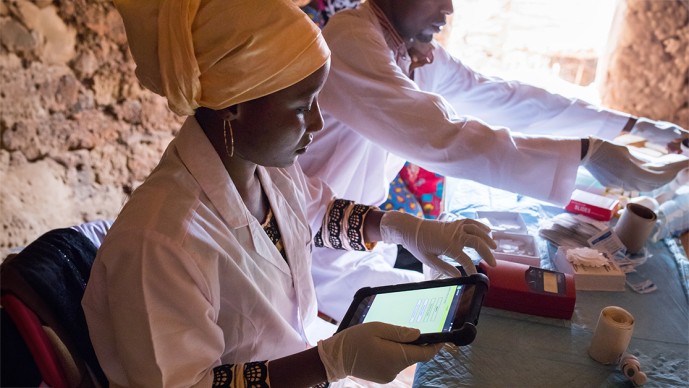
Grand Challenges South Africa (South African Medical Research Council) is launching this Request for Proposals (RFP) as a follow-up to the recent Gates Foundation call, Innovations in Cost-Disruptive Novel Tools for Screening and Diagnosis. In parallel, a complementary challenge is being introduced by Grand Challenges India (Biotechnology Industry Research Assistance Council).
This RFP is specific to South Africa-based researchers only. Collaborations are strongly encouraged where opportunity exists within the scope of study to build on established collaborations.
Background
Diagnostics Access, Affordability, and Point-of-Care Use
Limited access to affordable and accessible diagnostic tools remains a major barrier to effective disease control and equitable healthcare delivery in low- and middle-income countries (LMICs). Nearly half of the global population lacks essential diagnostic tests, and access is almost nonexistent for up to 81% of people in the poorest settings, driving delayed or missed disease detection at scale.
Diagnostics and screening underpin clinical care, surveillance, and disease control, yet many tools remain too costly, infrastructure-dependent, or operationally complex for use. The World Health Organization’s (WHO) ASSURED principles, as well as the experience with malaria rapid diagnostic tests (RDTs) and community antigen testing during COVID-19, demonstrate how decentralization, low complexity, and affordability can expand reach and strengthen surveillance. Where mature, widely deployed diagnostic classes already meet programmatic needs, pathway-changing innovation is more likely to yield impact than incremental improvements to established formats.
Beyond lowering consumable costs, the economic model must support high-volume screening through very low per-test costs and rapid throughput. Durable device- or platform-based solutions that use minimal or no consumables and amortize capital costs across large volumes, enabling near-zero incremental cost per test, can be transformational. Such approaches may draw on cross-sector technologies including imaging, acoustics, breath or environmental analyzers, contactless physiological monitors, or modular hardware with interchangeable sensing or analyte capabilities and minimal consumable inputs. In some contexts, appropriate use of artificial intelligence (AI) may enhance performance, enable task-shifting, automate quality control, and reduce operator variability, supporting high-throughput deployment in real-world LMIC workflows.
Informed by stakeholder consultations and aligned to the national health priorities, the SAMRC has identified three priority areas for investment under this initiative: tuberculosis (TB), HIV and related diagnostics, and Maternal, Neonatal, and Child health (MNCH) and Women’s Health.
The Challenge
This Grand Challenge seeks cost-disruptive tools for diagnosis and screening, defined as devices that amortize capital to near-zero incremental cost and consumable $1-class tests that materially reset the cost curve in LMICs while meeting real-world deployment constraints (see Table 1). For screening applications, cost targets should be interpreted per person screened; for diagnostic or monitoring applications, per test performed. Accordingly, this initiative aims to translate these cost-disruptive concepts into scalable solutions across high-priority disease areas.
The SAMRC seeks to support projects that demonstrate clear pathways to translation and impact within South Africa and similar LMIC settings. Particular emphasis will be placed on innovations that address local health system needs, strengthen research and innovation capacity, and enable local or regional manufacturing. Furthermore, we are particularly interested in transformative, high-risk, high-reward innovations that fundamentally rethink how diagnosis or screening is performed, including novel sensing modalities, software-defined diagnostics, and AI-enabled or software-only approaches that materially change performance, cost structure, or deployment models.
Table 2 outlines topic areas and use cases that are in scope for this RFP. However, applicants are not required to demonstrate existing disease-specific validation data for these use cases. Cross-sector or cross-disease innovations are explicitly encouraged. For example, platforms or technologies initially developed for non-health, non-diagnostic, or different disease applications are eligible, provided the proposal includes a clear, technically credible, milestone-based plan to adapt the technology to at least one relevant use case in Table 2.
The Challenge aims to:
- Source cost-disruptive devices and $1-class diagnostics for the priority conditions listed in Table 2, including cost-enabling manufacturing innovations.
- Advance cross-sector, platform, and multimodal solutions to enable scalable screening, same-visit decision-making, or reconfigurable use cases.
- Build a staged portfolio spanning high-risk early concepts to later-stage adaptation and scale, using milestone-based awards aligned to clear technology readiness level (TRL) criteria.
We are looking for proposals that:
- Clearly articulate the disease focus area and intended use case from Table 2, especially transformative approaches with a technically credible adaptation pathway where disease-specific validation does not yet exist.
- Describe operational feasibility for LMIC settings (see Table 1), including explicit attention to high-throughput screening workflows, where applicable.
- Include a feasible workplan and milestones appropriate to the maturity of the technology.
- Provide clear evidence to justify the requested funding level.
- Present a credible pathway to population-scale economics (approximately US$1 or near zero incremental cost), including key assumptions. For platform-based solutions, describe how multiple use cases can improve economics and sustainability.
- Commit to independent evaluation participation and appropriate ethical, regulatory and Gates Foundation open access policy, and the Intellectual Property Rights from Publicly Financed Research and Development Act 51 of 2008 (IPR Act (No. 51 of 2008).
|
Table 1: Cross-Cutting Design Criteria |
|
|
Criterion |
Expectation |
|
Rapid results |
Provides actionable results during a single patient encounter. |
|
Ease of use |
Operable by minimally trained users in decentralized settings. |
|
LMIC robustness |
Functions reliably in low-resource environments (heat, dust, intermittent power, limited infrastructure). |
|
Cold-chain independence |
Minimizes or eliminates cold-chain requirements through thermostable reagents and temperature-stable device design. |
|
Consumables minimization |
Reduces reliance on disposables and favors durable, reusable hardware architectures with negligible incremental cost per screening. |
|
Cost |
Demonstrates a credible pathway to approximately US $1 pertest or near zero incremental cost per person screened for devices. |
|
Transformative innovation |
Incorporates novel architectures such as multimodal sensing, high-order multiplexing, software-defined diagnostics, AI-enabled interpretation, or software-only approaches. |
|
Additional Desirable Attributes |
|
|
Attribute |
Expectation |
|
Multi-disease capability |
Enables testing for multiple diseases from a single platform or workflow. |
|
Data traceability and surveillance integration |
Ensures diagnostic results generated at the point of care are digitally structured, traceable, and interoperable with national and global surveillance systems, enabling secure transmission from test execution through aggregation and public-health use. |
|
Modularity |
Supports expansion to additional analytes or conditions without major redesign. |
|
Environmental sustainability |
Minimizes environmental impact through biodegradable or recyclable consumables and responsible end-of-life disposal strategies, and climate change-related measures to be described and reported where feasible. |
For this challenge, we are not seeking proposals that:
- Are implementation, procurement, delivery, or roll-out projects without substantive R&D or primarily consisting of large clinical trials or definitive field studies (limited, development-oriented evaluation may be appropriate).
- Are discovery-only biomarker projects without a clear pathway to a deployable prototype within three to five years, or that propose only incremental modifications of well-established approaches without a plausible step-change in cost, scalability, or screening value.
- Request funding levels that are not supported by commensurate technical readiness, feasibility evidence, and a credible pathway to validation.
- Lack a plausible pathway to meet cost and operational constraints, including reliance on expensive consumables or complex infrastructure without a credible mitigation plan.
- Are unwilling to share prototypes, reagents, and/or data as needed for third-party assessment under appropriate governance and legal arrangements.
Award Structure
To accommodate different stages of innovation, this Challenge has multiple award sizes commensurate with technology maturity. For example:
- Option A: Smaller proof-of-concept awards (up to R 5 million for each selected project, with a grant term of up to 24 months) to support early feasibility and prototyping, inclusive of technically risky, out-of-the-box concepts.
- Option B: Mid-level awards (up to R 8 million for each selected project, with a grant term of up to 24 months) to support product refinement and early validation.
- Option C: Larger awards (one award of up to R16,5 million, with a grant term of up to 36 months) to support mature platforms or advanced adaptation toward verification and field readiness, with commensurate evidence of technical readiness, feasibility, and a clear pathway to validation.
Final award amounts, number of awards at each level, and duration will depend on proposal quality and strategic fit. Applicants should request funding aligned with the scope and maturity of their proposed work and include a clear milestone plan proportionate to the support requested.
Funding will be subject to the SAMRC Terms and Conditions of funding.
Eligibility
This initiative is open to investigators or innovators from South African universities and other public research organizations, non-profit organizations, and for-profit companies registered in South Africa. The institution or organization of the lead investigator or innovator needs to be registered in South Africa. Collaborators from international organizations are eligible, except teams based in countries where cooperation with South Africa is suspended through ministerial directives. Projects must be based in South Africa and led by principal investigators who are citizens or permanent
residents working at eligible institutions or organizations registered in South Africa. Applicants are encouraged to build upon existing or complementary projects, studies, or trials, and to engage in collaborations with other institutions.
Applications from teams led by women and/or researchers at historically black universities or involving collaboration with women-led or historically black universities, as well as academic-private sector collaborations are strongly encouraged and will be prioritized. Only individuals who are South Africa citizens or permanent residents applying through a legally recognized corporate entity registered in South Africa are eligible.
Individuals and organizations classified as individuals for U.S. or R.S.A. tax purposes are not eligible. All applicants are expected to comply with the South African IPR Act (No. 51 of 2008) and the Gates Foundation's global access requirements.
|
Table 2: In-Scope Topic Areas, and Opportunities |
|
|
Topic area |
Tuberculosis (TB) |
|
Background |
Tuberculosis requires highly scalable and extremely low-cost tools (including assays and durable device-based technologies) for both community-level, symptom-agnostic screening and accessible near-patient diagnosis. |
|
Opportunity |
A. Community and primary-care symptom-agnostic screening tools (non-sputum approaches prioritized). |
|
|
B. Diagnostic tools or devices aligned with WHO TB diagnostic TPPs, including true POC tests that enable rapid confirmation outside centralized laboratories. |
|
|
|
|
Topic area |
Human Immunodeficiency Virus (HIV) |
|
Background |
Sustained epidemic control hinges on decentralized viral-load (VL) monitoring, timely early infant diagnosis (EID), and reliable identification of advanced HIV disease (AHD). |
|
Opportunity |
A. Near-POC or decentralized quantitative HIV viral-load testing. |
|
|
B. POC tool for EID for infants <18months to enable same-visit diagnosis and treatment initiation. |
|
|
C. Near-POC CD4 or AHD triage tests to identify people needing the AHD package of care. |
|
|
|
|
Topic area |
Sexually Transmitted Infections (STI) and Women’s Health |
|
Background |
Syndromic management leaves many STIs undetected and drives overtreatment. HPV screening and triage that enable same-visit screen-and-treat pathways are additional high-impact prevention priorities. |
|
Opportunity |
A. POC diagnostics for gonorrhea (NG), chlamydia (CT), and trichomonas (TV) in symptomatic adults. |
|
|
B. POC diagnostics for active adult and congenital syphilis with ≥90% sensitivity ≥95% specificity in populations, including neonates to inform treatment. |
|
|
C. POC tools for high-risk HPV primary screening, with ≥95% sensitivity for CIN2+ and ≥99% specificity for ≤CIN 1, enabling same-visit screen-and-treat for cervical precancer. |
|
|
D. Platforms supporting modular expansion to additional STI analytes (e.g., BV) and programmatic throughput. |
|
|
|
|
Topic area |
Maternal and Newborn Health |
|
Background |
Timely detection of pregnancy complications, (e.g., fetal growth restriction, preeclampsia, gestational hyperglycemia, and anemia) and neonatal infections are essential to prevent avoidable maternal and neonatal morbidity and mortality. |
|
Opportunity |
A. Preeclampsia screening and diagnostics: biomarker-based approaches such as quantitative PlGF/sFlt-1 ratios or retinal biomarkers measured with tools such as fundoscopy. |
|
|
B. Cuffless or low-burden blood pressure measurement approaches that reduce reliance on traditional cuffs and consumables and enable earlier detection and management of hypertensive disorders across routine antenatal care (ANC). |
|
|
C. Simplified, non-fasting or minimally invasive new biomarker-based approaches for gestational hyperglycemia detection/monitoring. |
|
|
D. Non-invasive, device-based gestational glucose monitoring approaches that eliminate finger sticks and consumables, enabling scalable repeat or longitudinal monitoring through durable, low-cost sensing platforms suitable for routine ANC. |
|
|
E. Rapid POC tools for neonatal sepsis triage to guide treatment escalation decisions and/or identify neonates who can safely avoid or step down from intensive care. |
|
|
F. Tools for earlier identification of infectious disease outbreak clusters in neonatal intensive care units (NICU). |
|
|