2026 Grand Challenges Annual Meeting Call-to-Action
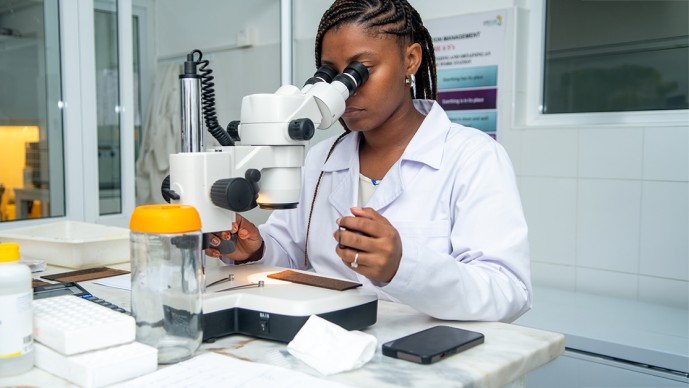
A lab technician analyzes mosquito samples to help public officials identify hotspots for mosquito breeding and assess the risk of malaria reintroduction in the Medical Entomologist Laboratory at the National Institute of Public Health in Praia, Cabo Verde, on November 5, 2025.
**NOTE: This opportunity was open only to participants who registered for the 2026 Grand Challenges Annual Meeting.
Before applying to this Grand Challenges request for proposals (RFP), applicants should familiarize themselves with the supporting documents, including the terms and conditions of the Gates Foundation, the Rules and Guidelines, Application Instructions, and Frequently Asked Questions.
The Opportunity
The Grand Challenges Annual Meeting (GCAM) fosters innovation and international collaboration to address the biggest challenges in global health and development. It has been held in 13 countries over the past 21 years and in a virtual format for three years. The 2026 meeting continues the Annual Meeting's goal of supporting a global community of problem solvers who work together to set an innovation agenda and advance breakthrough science – to go further and faster together.
The Challenge
This Call-to-Action provides an opportunity for those registered for the 2026 GCAM to take action based on ideas they develop and people they engage with during the meeting. As noted by past applicants in their submitted proposals, the meeting provides diverse opportunities to combine expertise and perspectives to accelerate the impact of what would otherwise be separate efforts by individual investigators. The grants awarded for past Call-to-Action opportunities show this, and we hope this year’s meeting will similarly catalyze collaborative projects that yield tangible solutions to key problems by the end of the grant period.
Funding
We will consider proposals for awards of up to $100,000 USD for individual pilot projects, or $200,000 for collaborative pilot projects, with a grant term of 18 months. Proposed budgets should be commensurate with the scale and complexity of the work. Indirect costs are allowable and must be included within the total requested funding, in accordance with the Gates Foundation’s indirect cost policy).
Eligibility Criteria
- Participants registered for the 2026 GCAM may submit one application as the Primary Applicant on behalf of an eligible affiliated organization for either a Pilot project or a Collaborative pilot project. Participants may serve as collaborators on multiple applications.
- Collaborative pilot proposals must involve participants from multiple institutions, and all collaborators must be registered participants in the 2026 GCAM. Priority will be given to new or newly expanded collaborations.
- Applications are welcome from nonprofit organizations, for-profit companies, international organizations, government agencies, and academic institutions.
- Individuals, as well as organizations classified as individuals for U.S. tax purposes, are not eligible to receive funding under this initiative.
- We encourage proposals led by investigators based in low- and middle-income countries, as well as proposals led by women investigators and women-led institutions.
We will give highest priority to proposals that:
- Contribute to partnership networks that elevate local perspectives and leadership, including projects led by investigators from low- and middle-income countries and balanced representation of women principal investigators.
- Are explicitly aligned with one eligible scientific track and the specific content presented within that track (see meeting agenda).
- Proposals should reflect ideas and collaborations developed through participation in the track sessions. Eligible scientific tracks for this RFP are listed below.
Scientific tracks eligible for the Grand Challenges Annual Meeting Call-to-Action
- Malaria: Innovation for Eradication
- Next Generation Vaccines, Biologics and Platform Technologies to Accelerate Malaria Eradication
- Dual Mission: Science Now + Ecosystems for the Future
- Evidence and Innovation for Impact in Women’s Health and Fetal Well-Being
We will not consider funding approaches that:
- Are not explicitly aligned with the content of one of the eligible meeting scientific tracks listed above.