Grand Challenges was created more than 20 years ago to spur innovation in global health and development. Since its inception, one of the many breakthroughs Grand Challenges has focused on is making a better banana.
There's a good reason to pay the banana so much attention: although the beloved fruit is a staple food in many regions of Africa, it's facing extinction.
Grand Challenges banana work started in 2005, with a grant to scientists from Australia and Uganda trying to fortify banana plants with iron, zinc, and vitamin A. But after over 10 years of research, boosting zinc and iron proved technically difficult without sacrificing yield. More promising results with vitamin A fortified plants collided with Uganda's new biosafety regulations, restricting the introduction of the so-called golden banana.
While the teams from Australia and Uganda were conducting their research, the banana was coming under increasing threat from different diseases. We realized that we had to broaden our strategy to include not just biofortification but protection of the banana itself.
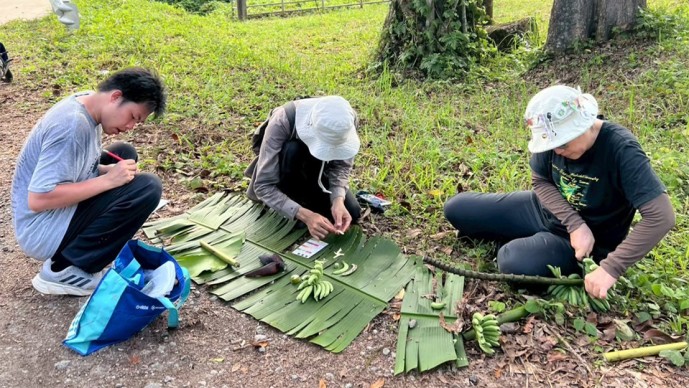
This work begins with understanding where resilience can be found. The latest breakthrough is happening at Indonesia's National Research and Innovation Agency (BRIN), where scientists are studying the world's largest set of wild bananas, some of which have evolved to withstand the pathogens decimating banana farms around the world. This genetic advantage makes them the best candidates from which to build a new breeding system and create a more resilient banana that can one day be grown on millions of smallholder farms in Africa.
Scientists in Indonesia are currently analyzing the genetic characteristics of wild banana samples they collected in 2024. Grand Challenges is building on this work with similar but smaller grants to five other Southeast Asian countries - Vietnam, Papa New Guinea, Thailand (including Lao Republic), Malaysia, and the Philippines.
The growing threat of disease
For its dietary significance and ubiquity, the banana has a stunning lack of genetic diversity. The majority of bananas we eat come from just three seedlings. The Cavendish, the yellow variety most exported to Western supermarkets, accounts for over half of the bananas grown worldwide. The African Plantain and East African Highland Banana, the cooking banana of choice in East Africa, together make up another quarter. This limited genetic makeup makes the banana especially vulnerable to pests and pathogens.
The banana is facing two main culprits. The Banana Bunchy Top Virus (BBTV), transmitted by tiny aphids and infected plant material, stunts the leaves, giving the plant a "bunchy" look at the top and producing deformed fruit - if any at all. BBTV, which was first reported in sub-Saharan Africa in 1958, is primarily controlled by eliminating infected plants and dousing others in pesticide, an added cost that most smallholder farmers in Africa cannot afford. None of the three main banana varieties have resistance against BBTV.
The other is Fusarium Wilt Tropical Race 4 (TR4), first detected in Africa in 2019. This deadly fungus enters the banana plant through the roots, taking over the vascular system and choking off water and nutrients from reaching the plant's leaves and stems, ultimately causing the plant's death. The fungus's menace doesn't end there. It can also infect and secretly live inside weeds. This turns the weeds into secondary hosts that shed TR4 spores into the soil and then lie in wait to infect newly planted banana plants for decades. It renders the land unusable for bananas and makes it much more difficult to get rid of the disease. The Cavendish are particularly vulnerable to TR4.
But resistance to both pathogens can be found in wild bananas, which is why we are focusing on banana breeding in Southeast Asia. Our hope is to leverage the region's rich variety of wild bananas to find a way to save African bananas from disease.
A more efficient breeding system
Banana breeding today is also extremely inefficient. We believe that these investments will help modernize banana cultivation around the world.
Currently, it takes years to produce a new banana variety because breeding is anchored around the seedless bananas we eat today.
The seedless varieties are more pleasant to eat, but they are harder to breed because they are sterile. This causes various complications during the breeding process; the most serious being the almost complete lack of seeds. Banana breeders need a whole new system based on wild bananas, which are packed with many thousands of small rock-like seeds per bunch and little pulp. They are inedible and thus haven't attracted much interest. In fact, they are considered a weed in Southeast Asia, often springing up after forests have been felled by storms, fires, or humans.
They've been overlooked by the global banana gene bank for decades, meaning the genetic fingerprint of many wild bananas are only now being characterized. What we do know is that there are ways to harness their genetic advantages.
A new, collaborative effort
After many years of negotiations, delayed by legal complications over Indonesia's laws on sovereign genetic material, we signed an agreement with the country in late 2023 that would provide African breeders access to the genetics of some of the wild bananas. The grant seeks to use conventional breeding techniques to create hardy new varieties for smallholder farmers in Africa. Meanwhile, Indonesia could benefit from royalties generated from any commercialization of resulting banana varieties to developed markets. The grants being awarded to the other five countries will give the effort regional muscle.
Indonesian scientists have already screened wild banana samples and are beginning to conduct DNA analyses to know what they're working with. Early selections show resistance to BBTV. With this collaboration, we are hopeful that we can one day create a banana that is tasty, will grow in abundance, and can stand up to pathogenic foes. Because a stronger banana means millions of farmers in Africa can continue to rely on this important fruit to feed their communities and provide for their families.
Grand Challenges will continue to support innovators working toward breakthroughs that change people's lives, whether it's making a better banana, preventing and treating diseases, or harnessing AI to accelerate the discovery, development, and delivery of new solutions.